


You buy high-quality coffee beans, own a well-known capsule machine – and yet your coffee tastes flat, bitter, or simply disappointing? You are not alone. Many coffee drinkers face exactly this problem, and most of them look for the cause in the wrong place.
In this article, we take a systematic look at the real reasons. No marketing buzzwords, no coffee myths – just practical explanations you can apply immediately. By the end, you will understand why good coffee is not a matter of luck, but the result of control, knowledge, and the right tools.
Great Beans, Expensive Machine – So Why No Good Coffee?
The assumption seems logical: if the beans are good and the machine is reputable, the coffee must taste good. This is precisely where the mistake lies.
Coffee is a highly sensitive natural product. Even small deviations in grind size, dosage, pressure, or extraction time can dramatically affect taste. The problem is that many capsule systems remove exactly these control variables from your hands. The result is coffee that is consistent – but rarely excellent.
To understand why this happens, we need to go one level deeper.
The 6 Most Common Reasons Why Coffee Tastes Bad
1. The Grind Size Does Not Match the Machine
Grind size determines how quickly water flows through the coffee grounds and which flavors are extracted. If the grind is too fine, the coffee becomes bitter. If it is too coarse, the result is sour or watery coffee.
With disposable capsules, the grind size is fixed – optimized for industrial averages, not for your personal taste.
2. Too Much or Too Little Coffee
Half a gram more or less can be the difference between a balanced cup and an unpleasant one. Many capsules simply contain too little coffee to produce a full-bodied taste.
3. Incorrect Extraction Time
The ideal contact time between water and coffee is critical. Too short results in under-extraction (sour), too long in over-extraction (bitter). Capsule machines use predefined extraction times, regardless of the coffee used.
4. Temperature and Pressure
Coffee requires a specific temperature and pressure range to properly extract its aromas. Even small deviations lead to flat taste. Poorly fitting or low-quality capsules can significantly disrupt pressure buildup.
5. Old or Improperly Stored Coffee
Coffee loses aroma quickly after grinding. Pre-ground coffee in capsules is often months old. Even high-quality beans cannot express their full potential under these conditions.
6. The Capsule Itself Is the Limiting Factor
Many coffee drinkers overlook this entirely. The capsule is not just packaging – it is part of the brewing system. Material, perforation, fit, and stability directly affect taste.
Why Capsule Machines Limit Flavor (A Technical Explanation)
Capsule machines are designed for convenience and reproducibility. They are meant to work quickly, cleanly, and consistently. To achieve this, manufacturers must heavily standardize the brewing process.
This means:
- Standardized coffee quantities
- Fixed grind sizes
- Predefined brewing parameters
Standardization makes acceptable coffee possible – but rarely exceptional coffee. Taste is individual, and what works for the average consumer often disappoints enthusiasts.
The Key Factor: Control Over Grind Size and Dosage
Anyone who has prepared coffee manually – with a portafilter, French press, or pour-over – knows the difference. Small adjustments lead to significantly better results.
This level of control is missing with conventional capsules. You cannot influence grind size or dosage. You are dependent on what manufacturers define as “average.”
Reusable Capsules: Solution or New Problem?
At some point, many coffee drinkers discover reusable capsules. The idea is appealing: use your own coffee, reduce waste, gain more control.
However, reality often disappoints. Cheap refill capsules frequently suffer from:
- Inaccurate fit
- Poor pressure buildup
- Material taste
- Tedious cleaning
It is therefore understandable that many users return to disposable capsules out of frustration.
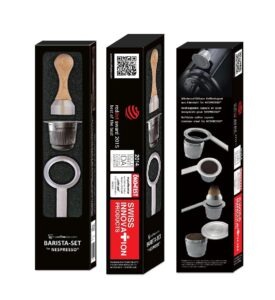
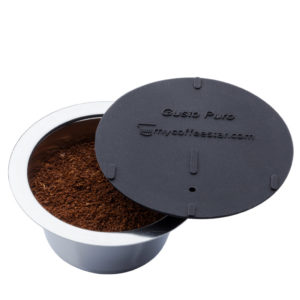
What High-Quality Stainless Steel Capsules Do Better
The difference lies in the details – and in the material.
High-quality stainless steel capsules offer:
- Precisely manufactured fit for consistent pressure
- Neutral material with no taste interference
- High durability
- Hygienic cleaning
The key is that the capsule must not feel improvised, but designed as an integral part of the brewing system.
Who Reusable Capsules Are Really For (An Honest Assessment)
Reusable capsules are not the perfect solution for everyone.
Ideal if you:
- Care about taste
- Want to try different coffees
- Are willing to invest a little more time
- Want control over your coffee
Less suitable if you:
- See coffee purely as a caffeine source
- Have no interest in experimenting with grind size and dosage
This honesty is crucial – because only satisfied users remain convinced long-term.
Using Nespresso and Dolce Gusto for Better Taste
Both systems work differently and require different approaches.
Nespresso
- Operates at high pressure
- Very sensitive to grind size
- Ideal for espresso-based drinks
Dolce Gusto
- Larger beverages
- Different flow rates
- More flexibility in dosage
In both cases, the same rule applies: the better the capsule, the more stable the result.
How to Get the Maximum Flavor From Your Capsule Machine
- Grind fresh
- Adjust grind size gradually
- Vary coffee dosage
- Manually stop the extraction if possible
- Take notes and fine-tune
After just a few attempts, you will taste clear improvements.
Typical Taste Problems and Their Causes
Coffee Tastes Bitter
Bitterness is caused by over-extraction. Too many bitter compounds are dissolved.
Common reasons:
- Grind too fine
- Too much coffee
- Extraction time too long
- Excessive pressure due to poor capsule fit
Coffee Tastes Sour
Sourness indicates under-extraction.
Typical causes:
- Grind too coarse
- Too little coffee
- Extraction too short
- Water temperature too low
Coffee Tastes Watery or Flat
This almost always indicates an imbalance between water and coffee.
Causes:
- Too little coffee in the capsule
- Grind too coarse
- Insufficient pressure buildup
Material Matters: Why the Capsule Is More Than a Container
Many people underestimate the impact of capsule material.
Plastic and Aluminum Capsules
- Can deform slightly under pressure
- Affect flow rate
- Designed for single use
- Limit coffee capacity
Stainless Steel Capsules
- Remain shape-stable under pressure
- Precisely engineered perforation
- Neutral taste
- Designed for thousands of brewing cycles
Pressure, Flow, and Extraction – Simplified
Capsule machines generate pump pressure that is directed through the capsule. The capsule controls how fast water flows and how long it remains in contact with the coffee.
Poorly designed capsules either allow water to pass too quickly or create uneven pressure – both result in poor taste. High-quality, well-fitting capsules maintain optimal pressure and flow.
Step-by-Step Guide to Better Capsule Coffee
Step 1: Choose the Right Coffee
Medium to dark roasts are generally more forgiving and stable in capsule systems.
Step 2: Grind Fresh
Grind only what you need. Aroma loss begins immediately after grinding.
Step 3: Set the Grind Size
Start between espresso and filter grind, then adjust gradually.
Step 4: Test Dosage
Begin with approximately 5–6 grams for espresso-style drinks and adjust.
Step 5: Observe and Adjust
If extraction is too fast or too slow, modify grind size or dosage.
Why Many People Do Not Get Better Coffee After Switching
A common misconception is that reusable capsules alone guarantee better coffee. In reality, results depend on the interaction of all variables.
Typical mistakes include:
- Incorrect grind size
- Low-quality capsules with poor fit
- Lack of patience during testing
Those who invest a little effort are rewarded with noticeably better coffee.
Better Coffee Long-Term Without Changing Your Machine
Many believe that better coffee requires a new machine. In practice, this is rarely true.
With:
- High-quality beans
- A good grinder
- Well-designed reusable capsules
You can extract surprisingly good coffee from existing Nespresso or Dolce Gusto machines.
Extended Frequently Asked Questions
How long does a stainless steel capsule last?
With proper use, it can last for many years.
Can I use any type of coffee?
Yes, but freshly roasted beans deliver the best results.
Is cleaning complicated?
No, rinsing after use and occasional cleaning are sufficient.
Does a reusable capsule reduce the cost per cup?
Yes, significantly over time – even without discounts.
Final Thought
Good coffee is the result of informed decisions. Understanding how flavor is created allows you to achieve remarkably high quality even with a capsule machine.
Control over grind size, dosage, and capsule design is the key – not buying the next machine.
